Adapting Transformers
to Wording-Based
Item Difficulty Prediction
Czech Academy of Sciences & Charles University


Introduction
Knowing the difficulty of items is vital for test construction
(minimize measurement error at targeted ability levels)Pretesting is oftentimes not feasible at all
(target population not available, item leakage, cost etc.)Expert judgment is inconsistent (AlKhuzaey et al., 2023)
What other options do we have?
The approaches
- Hand-crafted features → separate difficulty modeling (Freedle & Kostin, 1993)
- Hand-crafted features + word embeddings → separate modeling (Štěpánek et al., 2023)
- Hand-crafted features + last hidden states of pre-trained transformers → separate modeling (Sharpnack et al., 2024; Yancey et al., 2024)
- raw item wording → transformer fine-tuning (Netík et al., 2024)
Transformers 101
- Originally illustrated on machine translation (Vaswani et al., 2017) – encoder and decoder parts with cross attention in between
- “Attention is all you need” (Vaswani et al., 2017)
- State-of-the-art Large Language Models (LLMs) use only the decoder part to “autoregressively” generate next token (during pre-training, the model cannot attend future tokens)
- Encoder-only models are used to represent the input sequence (bi-directional self-attention during training)
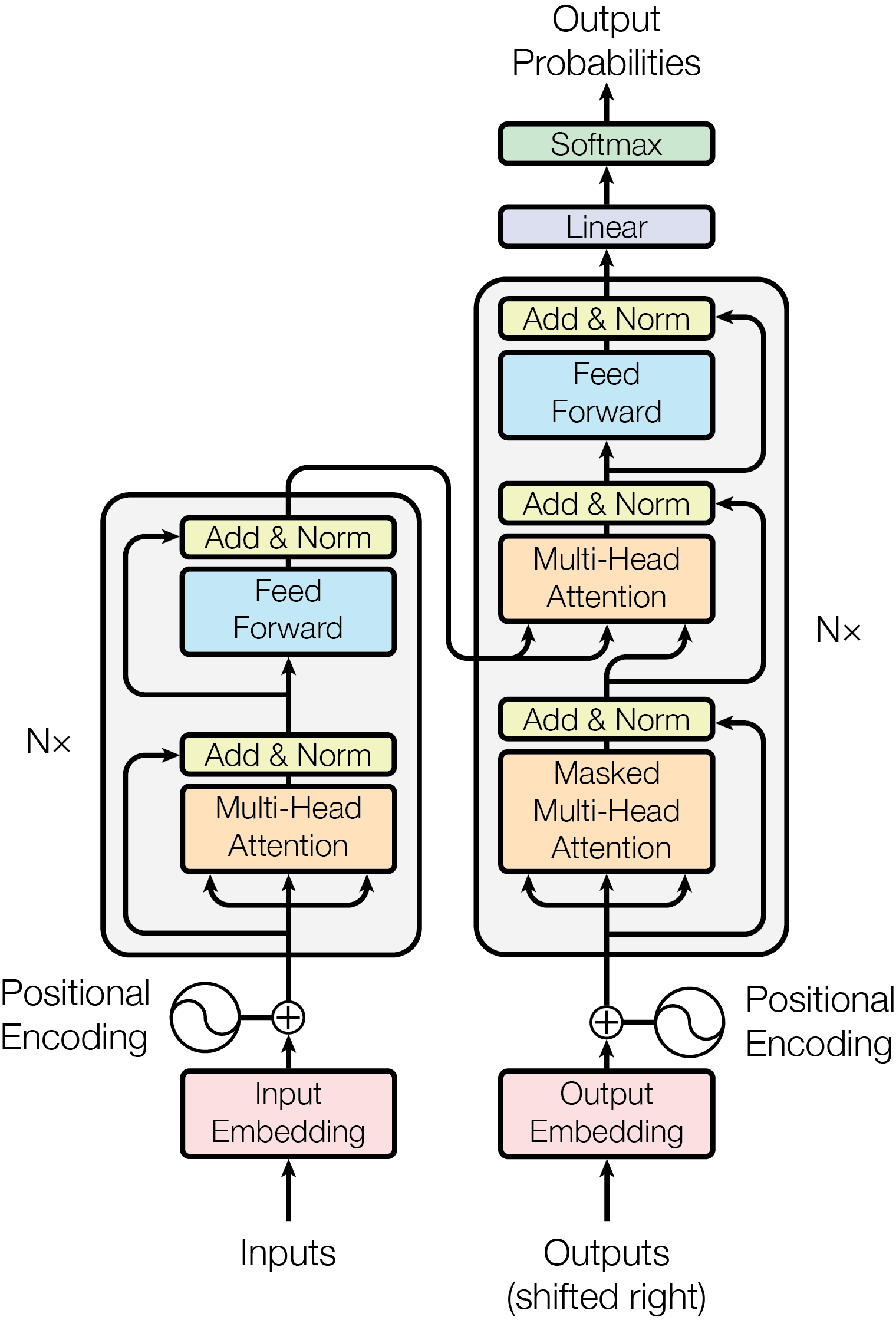
Figure 1: The architecture of a transformer (Vaswani et al., 2017)
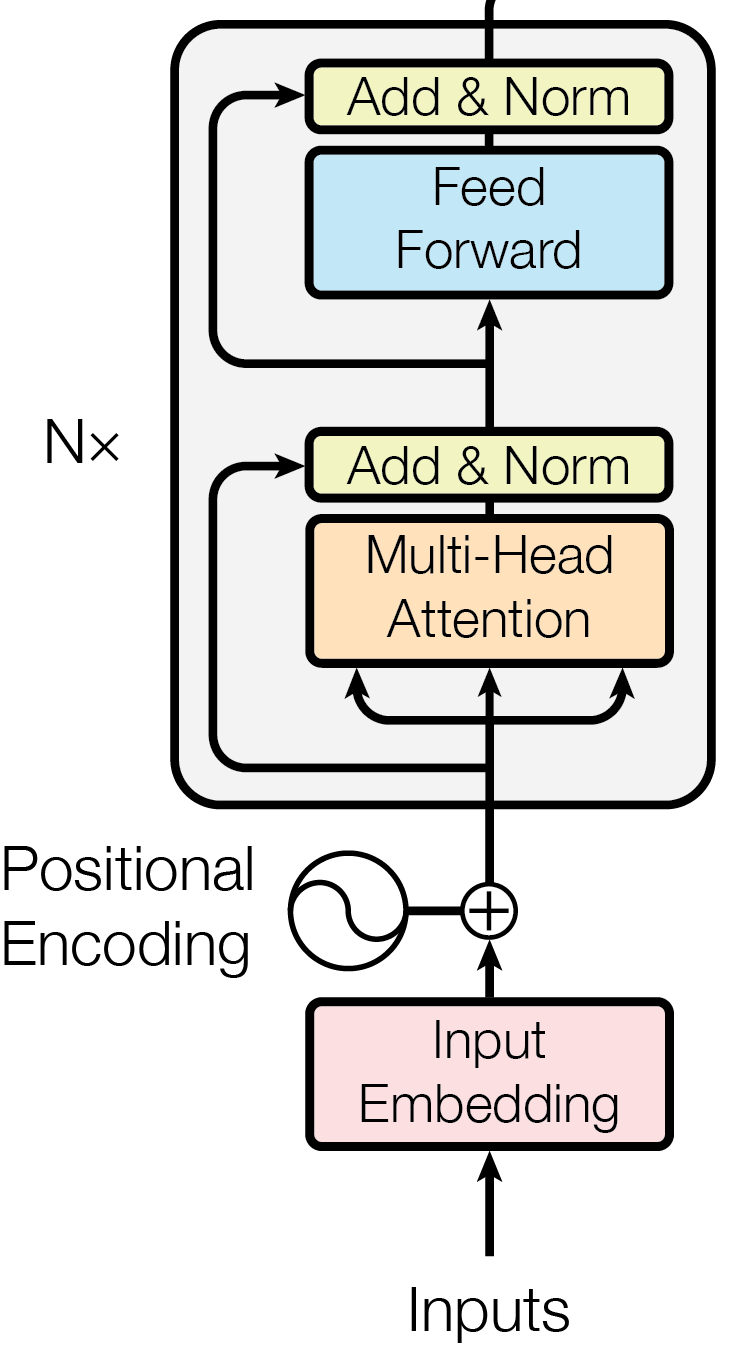
Figure 2: Encoder part of a transformer (Vaswani et al., 2017)
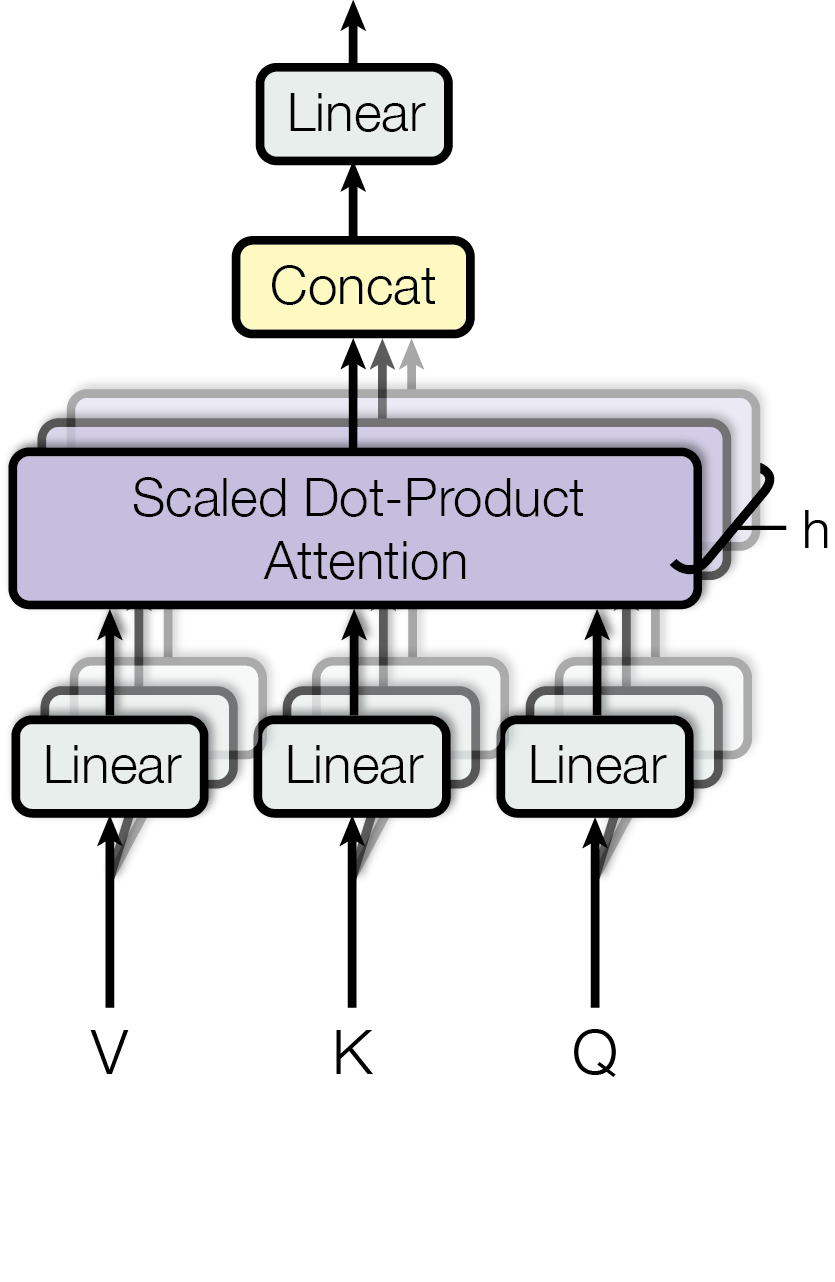
Figure 3: Multi-head self-attention (Vaswani et al., 2017)
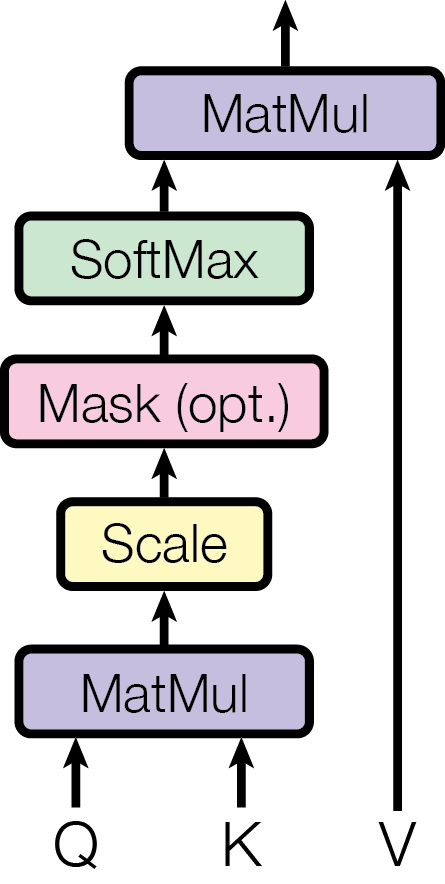
Figure 4: Scaled dot-product attention (Vaswani et al., 2017)
Previous effort (Netík et al., 2024)
- Fine-tuned
DistillBERT(Sanh et al., 2020) predicting item difficulty from the wording alone, zero preprocessingClassification head placed on top of the last encoder layer (the last hidden state for the
[CLS]token):
\hat{\mathbf{y}} = \mathrm{softmax}(\mathbf{W} \mathbf{h}_{\text{[CLS]}} + \mathbf{b}),\quad \mathbf{W} \in \mathbb{R}^{5 \times 768},\ \mathbf{b} \in \mathbb{R}^5,\ \mathbf{h}_{\text{[CLS]}} \in \mathbb{R}^{768}Trained on 720 multiple-choice RACE1 items labeled with Rasch difficulty, after MLM for domain adaptation on full RACE
Results only on par with the traditional approaches with hand-crafted features
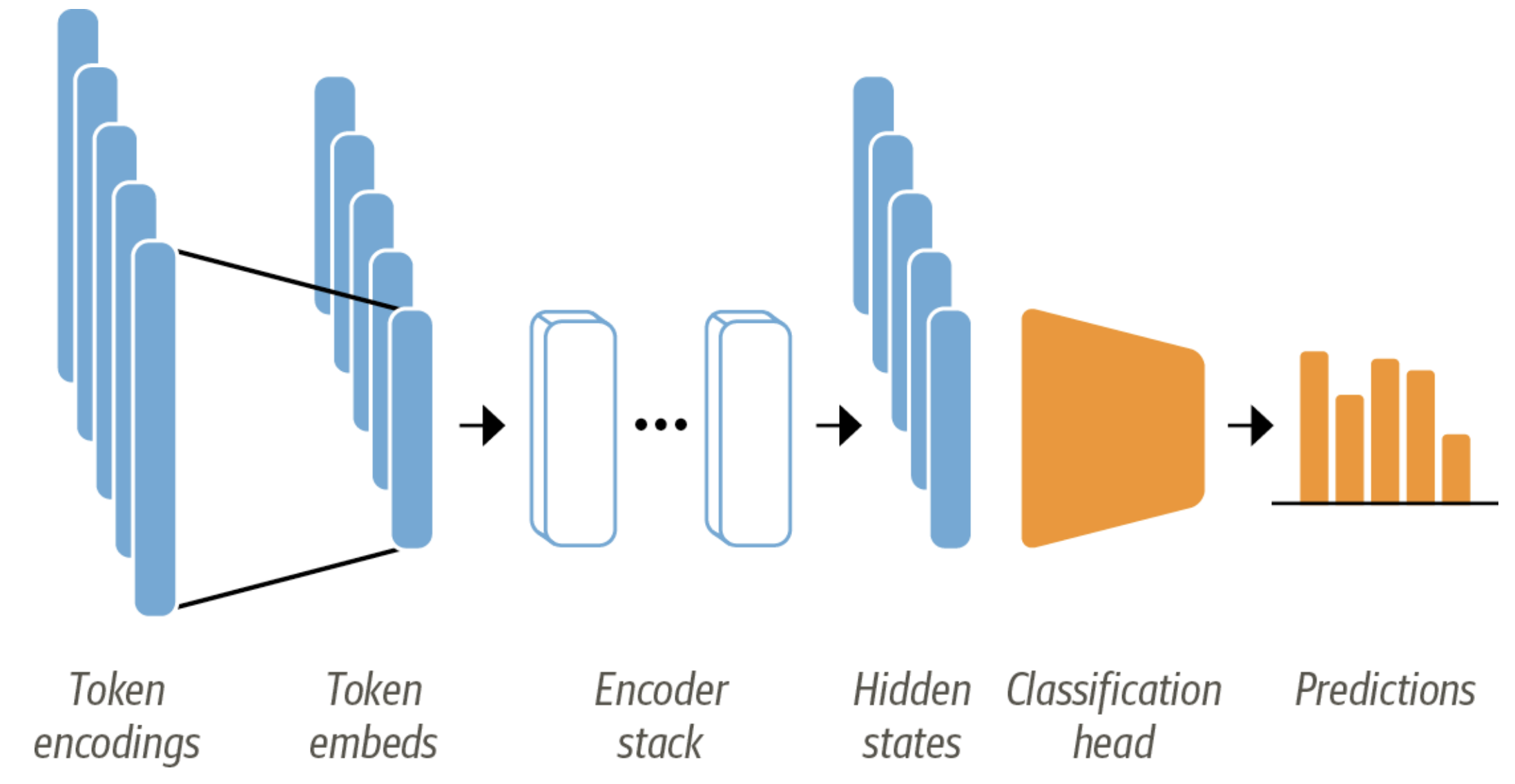
Sequence classification with an encoder-only transformer (from Tunstall et al., 2022)
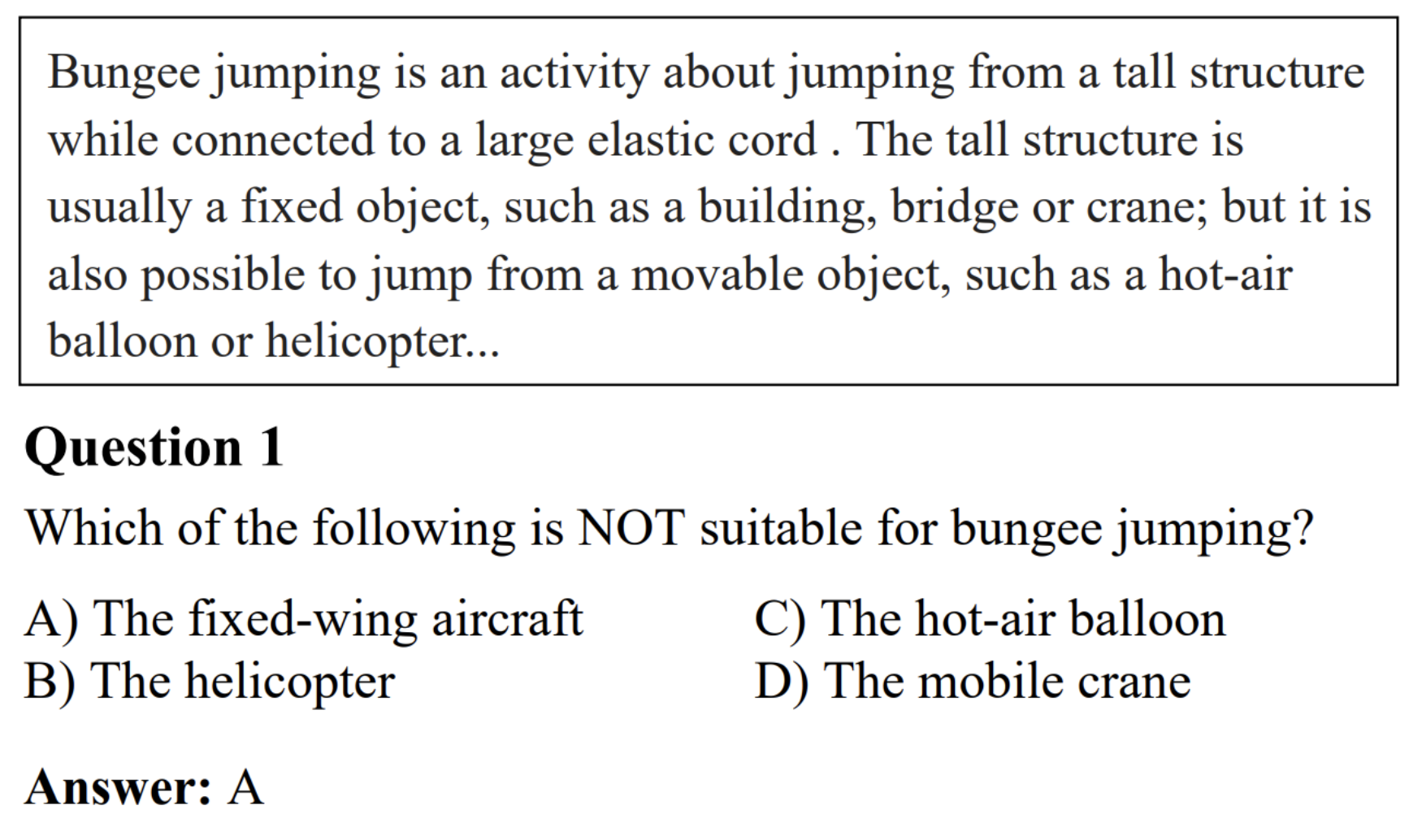
Figure 5: A sample item from the RACE dataset (Lai et al., 2017)
Takeaways from post-hoc evaluation
- Local optimum achieved?
- The model “focuses” primarily on the article1, failed to learn item structure and relationships between the parts
- Limited diversity of the training set – labelled subset only has a single question and option set per stem
- Unreliable Rasch difficulty estimates – large standard errors
- Small dataset
Current directions
- Overcome the diversity/sample size issues by model and/or training procedure modification
- Do not use
[CLS]’s hidden state, but pool over the other tokens in the last layer (and/or deeper layers) - Encode each wording part separately and concatenate
- Multi-task learning (Caruana, 1997) – add item wording part tagging alongside the difficulty prediction
- Use examples labelled by SOTA LLMs (using few-shot learning) for intermediate training
- Do not use
Preliminary experimentation results
- RACE dataset with middle and high school items + additional college-level items – school type as a difficulty proxy (NB: slightly different task)
- Balanced sample of approx. 3K items (70% train, 15% validation, 15% test)
- Predictive accuracy improved from 0.69 (previous
[CLS]-based approach on the same dataset) to 0.86 (mean-pooled last hidden states)
Thank you!
Jan Netík
netik@cs.cas.cz
Institute of Computer Science, The Czech Academy of Sciences
Faculty of Education, Charles University